Volunteers learn how to measure dissolved oxygen using a Hach D.O. test kit during a WAV Master Naturalist training. Photo by Rachael Lewandowski-Sarette.
|
Small Actions to Steward our Shared Waters |
For the past 30 years, WAV has engaged adults and youth in the collection of water quality data useful for managing the health of Wisconsin’s 86,000+ miles of streams and rivers. Though we love wading into streams to assess stream health, we also know this is not the only way to keep our waters healthy!
Aside from stream monitoring and data collection, volunteers can take other actions to steward our shared waters, like adopting a storm drain or learning about water level patterns. Check out the titles in this month's newsletter to learn 4 different actions you can take to keep our waters healthy!
Whether you are at home or in the field, there is something for you!
|
|
|
|
Read How Volunteers Expanded the Known Range of Aquatic Invasive Species |
Volunteers in Lake Tomahawk search for aquatic invasive species during 2026 Snapshot Day. Photo by Stephanie Bouismenue.
|
The results are in for Snapshot Day 2026!
On August 8, 2026, almost 200 people who love Wisconsin’s waters came together for the 13th annual Aquatic Invasive Species Snapshot Day—a statewide search for aquatic invasive species (AIS). From rivers and streams to lakes and wetlands, volunteers fanned out across 125 different waterbodies in Wisconsin, helping monitor the health of the places they care about most.
This year, volunteers found AIS in waters where they had not previously been reported, helping to expand the known range of aquatic invasive species. Amazing work for ONE day!
Save the date for next year's Snapshot Day on August 14, 2027 to join the search!
Interested in monitoring for AIS throughout the year? Checkout Project Riverine Early Detectors (Project RED) to learn how you can get involved!
|
|
|
|
Be Drought Aware and Help Save Native Mussels |
Map showing streamflow drought status and forecasts. Graphic from the RiverDroughtCast website.
|
One of the 6 elements of stream health WAV volunteers monitor for is streamflow or the volume of water moving past a cross-section of a stream over a set period time. As Wisconsin is currently experiencing varying levels of drought across the state, some volunteers in Northern Wisconsin may have noticed extremely low streamflow this year. There’s actually a name for that: streamflow drought!
According to the U.S. Geological Survey’s River DroughtCast, “streamflow drought occurs when streamflow at a particular location drops to levels that are unusually low for the time of year…[based] on the historical record for each site.” Streamflow drought can even occur during wetter seasons ー as long as levels are unusually low for that site, it is classified as streamflow drought.
As WAV volunteers may know, streamflow is important to water quality and aquatic habitat. When streamflow drought occurs, rivers, streams, and wetlands shrink or dry out, negatively impacting the aquatic habitats they hold. For example, this year’s drought conditions in Wisconsin have left our state’s native and endangered mussels stranded on stream banks due to low water levels.
To learn more about streamflow drought and to see weekly forecasts of streamflow drought at select streams, check out the What is streamflow drought? website and the River DroughtCast tool.
|
|
|
|
Take the "Score My Shore" Survey |
-
Increased shoreline stability, reduced erosion, and better flood control through native plantings
- Protected aquatic and terrestrial wildlife habitat through improved water quality and shoreland vegetation (i.e. better homes for fish, turtles, birds, and other wildlife!)
- Increased property value for homes with restored shorelands
|
Check out this resource highlight by Extension Lakes to dive deeper into what your property can tell you about lake health using the Score My Shore survey.
Assessing shoreline habitat is one way to care for our streams and rivers. The Healthy Lakes and Rivers Program also provides grants and technical support to owners who want to take steps to improve their shoreline habitat. Head on over to their website to learn more!
|
|
|
|
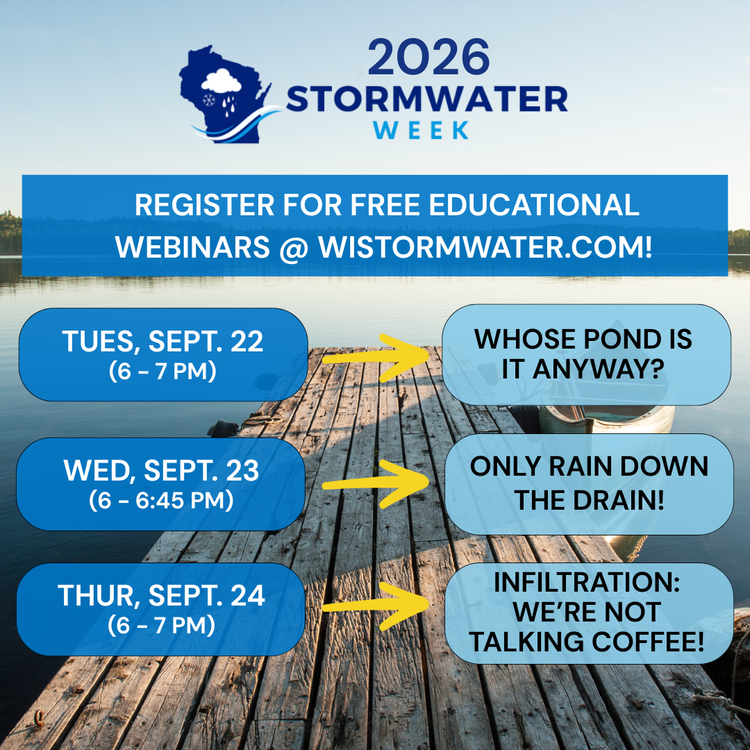
Starting Sat. Sept. 19th and running through Sun. Sept. 27th, WI Stormwater Week is an awareness campaign that aims to inform, educate, and engage Wisconsin residents on the topic of stormwater pollution prevention. This includes FREE educational webinars on Tuesday, Sept. 22 - Thursday, Sept. 24 @ 6 PM!
This year’s webinars include:
|
-
Whose Pond is it Anyway? (Sept. 22nd) Listen to how the WI Department of Natural Resources encourages municipalities to create a program for the public and private stormwater pond maintenance and implementing stormwater pond maintenance programs for private landowners.
-
Only Rain Down the Drain! (Sept. 23rd) Learn more about the county’s Adopt-a-Storm Drain Program and how to get involved. WAV volunteer Marge Wappler (Pewaukee River) will be helping lead the discussion!
- Infiltration: We’re Not Talking Coffee! (Sept. 24th) Dive into the importance of incorporating native plants in landscaping for aiding stormwater infiltration.
|
Head on over to the WI Stormwater Week website to learn more and register for webinars!
Looking for more ways to get involved with WI Stormwater Week? This year's Call to Action for WI residents is to get involved with a local municipality or an organization’s Adopt-a-Storm Drain Program! Maintaining an adopted neighborhood storm drain is easy and fun!
|
|
|
|
Have a Stream Monitoring Question? |
Submit a stream monitoring question to WAV for a chance to have it answered in next month's newsletter!
|
|
|
|
Help preserve and protect Wisconsin’s streams
|
|
|
|
| The Water Action Volunteers (WAV) stream monitoring program is an ongoing partnership between the University of Wisconsin–Madison Division of Extension and the Wisconsin Department of Natural Resources, in collaboration with over 50 local groups and organizations.
|
|
|
|
Manage your preferences | Opt Out using TrueRemove™
Got this as a forward? Sign up to receive our future emails.
View this email online.
|
3500 University Avenue | Madison, WI 53705 US
|
|
|
|
This email was sent to .
To continue receiving our emails, add us to your address book.
|
| |
|
|